Foreign businesses entering Thailand often underestimate the real cost of border complexity, not tariffs alone, but route delays, customs valuation inconsistencies, documentation loops, and land-border compliance friction. Mastering these operational nuances determines profitability and timeline predictability in an increasingly interconnected market. Key Points:• Thailand functions as the essential compliance control tower for mainland ASEAN expansion.• […]








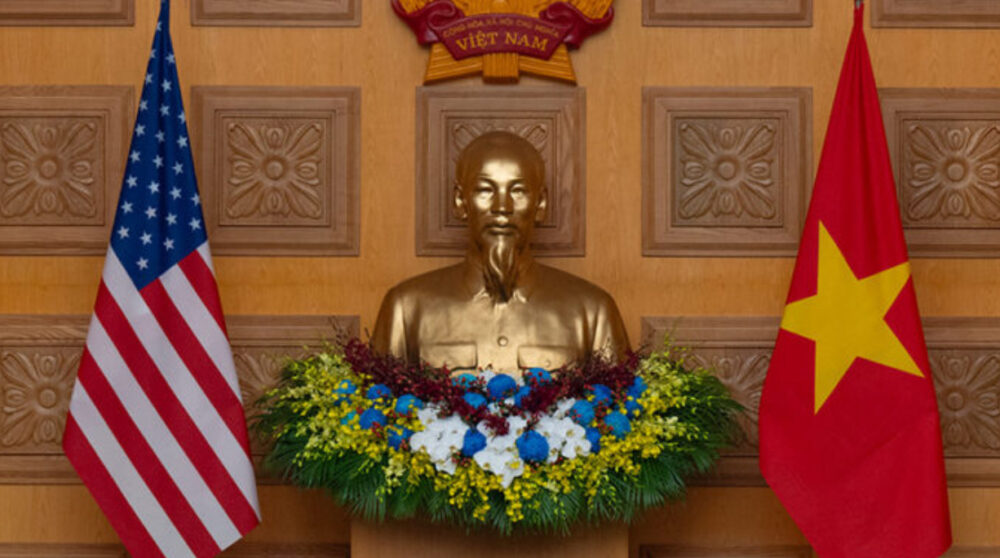
Donald Trump’s second term as U.S. President has ushered in a wave of sweeping policy changes under the banner of “America First.” His administration’s renewed focus on protecting domestic industries, fostering energy independence and recalibrating international trade relations has had significant implications worldwide. Among the nations most affected by these changes is Vietnam, a vital trade partner of the United States. With tariffs emerging as a cornerstone of Trump’s policies, the economic and trade relationship between Vietnam and the U.S. is set to evolve in complex ways. This Blog Article examines Trump’s broad policy landscape and its specific impact on Vietnam-U.S. trade relations, with a focus on the administration’s tariff-centric approach.
Implications to Vietnam
From the outset of his second term, Trump signaled a strong commitment to reshaping U.S. trade policy. Central to this effort is the “America First Trade Policy,” which prioritizes reducing trade deficits and protecting American industries through expanded use of tariffs. His administration has proposed investigations into global trade imbalances, with measures such as a "global supplemental tariff" to address them. Vietnam, which ranks third among nations contributing to the U.S. trade deficit, faces potential tariffs ranging from 10% to 20%. This places Vietnam in a challenging position, as higher tariffs could significantly impact key export sectors like textiles, electronics, and furniture. These industries, which are critical to Vietnam’s economy, may lose their competitive edge in the U.S. market due to increased costs.
U.S.-China Trade War: A Blessing In Disguise for Vietnam
At the same time, Trump’s policies have also created opportunities for Vietnam. The ongoing U.S.-China trade war has led many multinational corporations to seek alternative manufacturing hubs, and Vietnam has emerged as a prime destination. With its strategic location, competitive labor costs and robust industrial infrastructure, Vietnam is well-positioned to attract investments diverted from China. This shift could bolster Vietnam’s industrial real estate and logistics sectors, enabling the country to strengthen its role in global supply chains. However, the potential benefits are tempered by risks of increased scrutiny. Concerns over the use of Chinese-origin materials in Vietnamese exports may lead to stricter trade investigations, complicating Vietnam’s trade relationship with the U.S.
Climate, Energy and the Environment
Energy policy is another area where Trump’s administration is driving significant changes with implications for Vietnam. The push for energy dominance includes boosting domestic production of fossil fuels and expanding exports, particularly liquefied natural gas (LNG). These measures offer Vietnam an opportunity to diversify its energy imports while addressing its trade surplus with the U.S.
Energy cooperation could become a cornerstone of the bilateral relationship, fostering closer economic ties. Simultaneously, Vietnam must also navigate the broader challenges posed by Trump’s fiscal and monetary policies. A strengthened U.S. dollar, resulting from these policies, could make Vietnamese goods more expensive in the U.S. market, potentially reducing their competitiveness and impacting export revenues.
Foreign Direct Investment
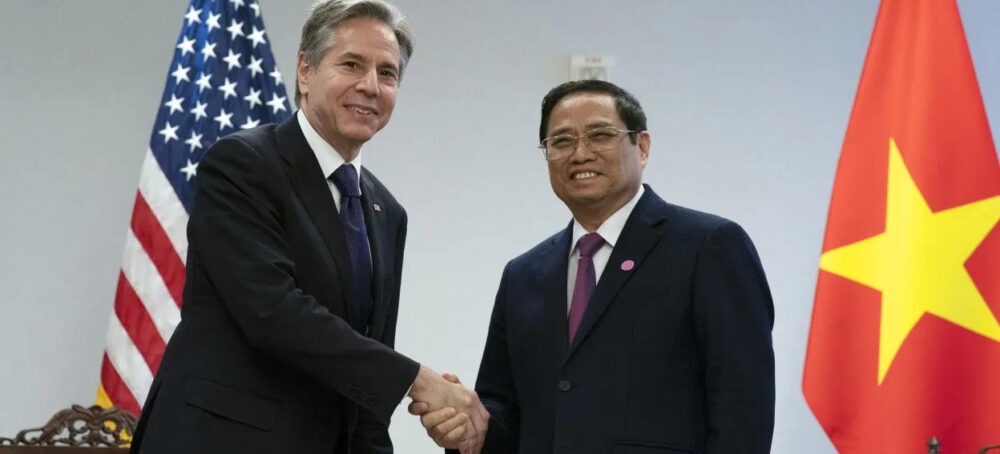
Foreign direct investment (FDI) also plays a critical role in Vietnam’s economic growth, and Trump’s policies have indirect implications in this area. As companies seek to diversify supply chains and reduce reliance on China, Vietnam has become an attractive destination for FDI. U.S. businesses have already invested over $12 billion in Vietnam across sectors such as manufacturing, technology, and services. This trend is likely to continue, further bolstering Vietnam’s industrial growth and economic resilience. However, Vietnam must address regulatory and compliance risks to maintain its position as a reliable trade and investment partner. Transparent practices and adherence to international trade norms will be essential in navigating these complexities.
The economic relationship between Vietnam and the U.S. has deep roots, with trade and investment ties expanding significantly over the years. In 2022, bilateral trade reached $142.1 billion, with the U.S. importing $127.5 billion worth of goods from Vietnam. Key Vietnamese exports included textiles, electronics and furniture, which have consistently driven growth in trade relations. The U.S., on the other hand, exported $11.4 billion worth of goods to Vietnam, including raw cotton, soybeans and high-tech products. Services trade has also seen substantial growth, with U.S. exports to Vietnam totaling $2.4 billion in 2022, driven by sectors like travel, transportation and financial services.
Despite these impressive trade figures, the imposition of tariffs under Trump’s second-term policies could disrupt the balance. Higher costs for Vietnamese goods in the U.S. market may dampen demand, forcing Vietnam to explore new markets or innovate to maintain its competitive edge. Additionally, the U.S. administration’s focus on investigating trade deficits and unfair practices could lead to further challenges. Vietnam’s reliance on Chinese-origin materials in its exports may invite stricter regulatory scrutiny, requiring the country to implement measures to address these concerns proactively.
Conclusion
Looking ahead, the relationship between Vietnam and the U.S. will hinge on how both nations adapt to the evolving trade landscape. Vietnam’s ability to attract FDI, enhance its industrial infrastructure and comply with international trade norms will be crucial in maintaining its position as a key U.S. trade partner. For the U.S., fostering a balanced and mutually beneficial trade relationship with Vietnam aligns with its broader strategic goals in the Asia-Pacific region.
Trump’s second-term policies represent a significant shift in the global trade paradigm, with tariffs as a central tool for achieving economic and political objectives. For Vietnam, these changes present both challenges and opportunities. By leveraging its strengths and addressing potential risks, Vietnam can navigate this complex landscape and continue to thrive as a vital player in global trade.
You might also like: Billions Pour into Vietnamese Businesses: Which US Corporation Leads the Investment Race?