

Company dissolution in Vietnam is a multifaceted process that demands careful attention to legal requirements and meticulous planning. In Vietnam, understanding the process and legal requirements for dissolving a company is crucial to ensure a smooth and legally compliant exit strategy. This blog article aims to shed light on the intricacies of company dissolution in Vietnam, providing entrepreneurs, business owners, and investors with valuable insights and guidance throughout this complex procedure.
Cases of Company Dissolution in Vietnam
Company dissolution in Vietnam is a procedure that marks the culmination of a business entity, ensuring the settlement of debts and financial obligations. Governed by the Law on Enterprises (LOE), this process encompasses voluntary and compulsory dissolution scenarios, each with distinct parameters and consequences.
Voluntary Dissolution
Voluntary dissolution, as the name suggests, occurs when company owners make a conscious decision to terminate operations. Voluntary dissolution is possible in the following cases:
- The stated operating period in the company’s charter expires, and the owners choose not to extend it further.
- The owners discontinued their business endeavors due to the recognition of the company’s inefficiency.
Compulsory Dissolution
On the other hand, compulsory dissolution arises when competent state agencies intervene due to non-compliance with legal provisions. This may transpire when a company violates established regulations, leading to the mandated cessation of all business activities. Furthermore, compulsory dissolution can be enforced if the company fails to meet the minimum requirement for company members or shareholders and cannot rectify the shortfall by adding additional members within a period of time.
How to Dissolve a Company in Vietnam
In response to prevailing challenges, such as the global economic downturn, the impact of the epidemic or political upheaval, foreign investors may choose to embark on business restructuring plans, which entail the cessation and closure of their invested entities in Vietnam. However, it is crucial to recognize that the liquidation process for a Vietnamese company can be a complex and resource-intensive endeavor, accompanied by substantial implications of tax and regulatory. To navigate this intricate landscape successfully, foreign investors must possess a comprehensive understanding of the conditions and procedures mandated by Vietnamese law before embarking on the journey of dissolving their company.
Conditions for Dissolution of a Company
Pursuant to the provisions of Article 207 of the Enterprise Law 2020, a company in Vietnam can only be dissolved when one of the below circumstances occurs:
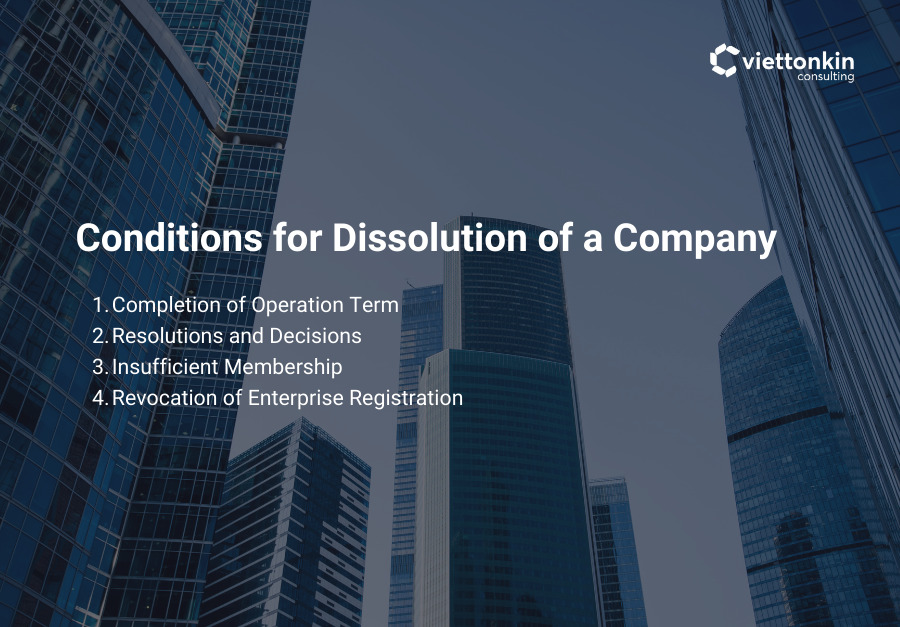
(1) Completion of Operation Term
When the specified operational duration, as stated in the company’s charter, comes to an end without a decision to extend it.
(2) Resolutions and Decisions
Dissolution may occur based on resolutions and decisions made by the business owner, Members’ Council (for partnerships and limited liability companies), or the General Meeting of Shareholders (for joint-stock companies).
(3) Insufficient Membership
If the company fails to meet the minimum number of members prescribed by the Law within six consecutive months and neglects to undergo the necessary procedures for transforming its enterprise type, dissolution becomes a legal recourse.
(4) Revocation of Enterprise Registration
In cases where the certificate of enterprise registration is revoked, unless otherwise specified by the Law on Tax Administration, dissolution becomes an inevitable consequence.
However, it’s important to note that dissolution can only proceed once the company ensures the complete settlement of debts and other property obligations. Business owners cannot dissolve their companies during ongoing dispute settlement processes at court or arbitration. In the event of an enterprise registration certificate revocation, both the concerned manager and the enterprise bear joint responsibility for the outstanding debts.
Dissolution Procedure
Below is a step-by-step breakdown of the dissolution procedure:
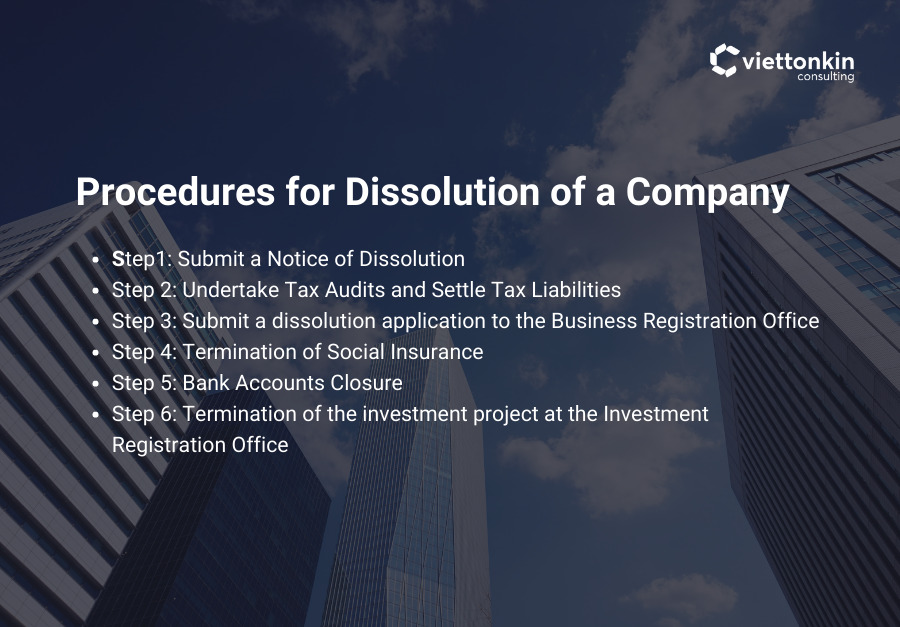
Step 1: Submit a Notice of Dissolution
The initial step requires the company to submit a formal notification of dissolution together with the decision on the enterprise to the business registration office in the city or province where it is headquartered. Once the notice is submitted, the enterprise’s legal status on the National Business Registration Portal will be changed to ” undergo dissolution procedures.” The information regarding the enterprise’s dissolution is also relayed to the tax authority by the Business Registration Office.
Step 2: Undertake Tax Audits and Settle Tax Liabilities
In this critical phase, the company must undergo tax audits and fulfill any outstanding tax obligations with the tax authorities. Important documents include a written request to invalidate the tax code, a decision on the dissolution of the enterprise, and documents related to the tax obligations of the enterprise as required by the tax authorities. The duration of this process depends on the complexity and level of compliance, typically ranging from 3 to 12 months.
Step 3: Submit a dissolution application to the Business Registration Office
Within five working days of receiving the application for registration of dissolution, the Business Registration Office updates the legal status of the enterprise in the National Enterprise Registration Database to the “dissolved”. Simultaneously, the office also issues an official notice of the enterprise’s dissolution. During this step, it is crucial to comply with any requirements and not encounter objections from relevant parties to proceed smoothly.
Step 4: Termination of Social Insurance
Closing the social insurance books is a vital procedure to conclude the payment of social insurance premiums for employees. Employers must follow the prescribed steps, including issuing a labor reduction notice and providing the necessary documents such as the social insurance book and the decision to terminate the labor contract, as outlined in Decision 595/QD-BHXH.
Step 5: Bank Accounts Closure
After receiving the notification of the enterprise’s dissolution status update on the National Enterprise Registration database, the company can proceed to close its bank accounts. For more information, enterprises are required to work together with the bank to carry out the required procedures. In case there is not any bank account opened, a letter of commitment confirming the absence of debts with any banks may be required.
Step 6: Termination of the investment project at the Investment Registration Office
As the final step, once all debts and dissolution costs are settled, the FDI company must file an application dossier to terminate the investment project with the licensing authority, typically the Department of Planning and Investment. If no objections or concerns from relevant parties are raised, the licensing authority will confirm the termination of the investment project.
Conclusion
Navigating the intricacies of company dissolution in Vietnam is no easy feat. As this blog article has highlighted, understanding the legal framework, complying with regulatory requirements, and addressing various aspects such as assets, liabilities, employees, and taxation are crucial for a successful dissolution process. However, the complexities involved may still present challenges to even the most experienced entrepreneurs and investors.
To ensure a seamless and efficient dissolution process, it is highly recommended to seek professional guidance and assistance. Whether you are an entrepreneur closing down a business, an investor restructuring your portfolio, or a company facing bankruptcy, Viettonkin’s consulting service can help you navigate the dissolution process with efficiency, ensuring legal compliance and minimizing potential risks.
Don’t leave the dissolution of your company to chance. Call upon the expertise of Viettonkin’s consulting service and embark on a successful investment journey in Vietnam. Contact us today to discuss your specific needs and take the first step toward a smooth and legally compliant company dissolution process.