

The Vietnam freight and logistics market is classified according to function (Freight Transport, Freight Forwarding, Warehousing, Value-added Services, and Other Functions) and end user (Manufacturing and Automotive, Oil and Gas, Mining and Quarrying, Agriculture, Fishing, and Forestry, Construction, Distributive Trade (Wholesale and Retail Segments – FMCG Included), and Other End Users (Telecommunications, Pharmaceuticals, etc.).
Market Overview
During the forecast period (2022-2027), the Vietnam freight and logistics market is predicted to grow at a CAGR of more than 5.5 percent. Vietnam is an emerging manufacturing powerhouse. As a result of China’s trade war with the United States, Vietnam has welcomed firms looking to relocate manufacturing away from China. It received its largest annual influx of foreign direct investment (FDI) in 2019 and gained prominence as an alternative center when COVID-19 disrupted China’s industrial systems and wreaked havoc on supply chains.
Aside from barriers and constraints, Vietnam’s logistics industry benefits from free trade agreements and the rapid rise of e-commerce. The Vietnamese freight and logistics industry is being propelled by rapid economic growth, growing domestic production, expanding consumption, and brisk e-commerce. A lack of transportation infrastructure and high logistical costs are two market constraints. Contract logistics is one of the most prominent developments in the Vietnamese freight and logistics industry.
The country’s growing e-commerce enables the creation of start-ups with match technologies that necessitate more efficient logistics services, notably in the last-mile delivery and value-added services sectors. Vietnam’s logistics economy is becoming more liberalized, allowing new enterprises to capitalize on increased demand. Vietnam has also signed the Regional Comprehensive Economic Partnership Agreement. It expands the scope of its trade agreements to include practically all of the world’s major economies. As a result, Vietnam is well positioned to serve as a global industrial and commercial hub.
Market Trends
High Economic Growth and Rising Consumption Lead to an Increase in Trade
Vietnam’s economy is one of the fastest growing in the area, and the country has become a hub for investment and trade. Vietnam is a member of the ASEAN Economic Community (AEC) as well as the ASEAN Free Trade Area (AFTA). As part of AFTA, ASEAN countries (Brunei, the Philippines, Indonesia, Laos, Myanmar, Malaysia, Singapore, Thailand, and Cambodia) are committed to making the region a competitive trade area. All of the country’s industries are expanding rapidly and attracting international investment. Aside from that, the rise in consumption has resulted in an increase in the flow of goods into the country.
On December 29, 2021, the General Statistics Office issued socioeconomic statistics for 2021. As a result, despite the increase in COVID cases, GDP was predicted to improve favorably in 2021. In 2021, the industry’s added value increased by 4.82 percent compared to 2020, with the processing and manufacturing industries expanding by 6.37 percent.
According to a survey, Vietnam’s e-commerce sector would be the fastest-growing in Southeast Asia by 2026. Despite travel limitations and social isolation during the CVID-19 epidemic, e-commerce increased by roughly 18 percent.
Health Sector Requires Logistics Facilities
Vietnam has a thriving pharmaceutical market, with growing earnings among its rapidly aging population. As life expectancy rises, an increasing proportion of the Vietnamese population is expected to suffer from chronic illnesses associated with old age, which is expected to raise the demand for medicines. Despite the demand, domestic medication manufacturing is still in its infancy.
Greater demand for healthcare services, along with limited public government resources, creates potential for the Vietnamese healthcare business to expand. The European Union-Vietnam Free Trade Agreement (EVFTA) and the revised Investment Law will help international producers and suppliers looking to enter the Vietnamese market, which is still heavily reliant on imported medical equipment and medications.
Businesses Ultilize to 4.0 Technologies in Freight and Logistics
Many uses of science and technology in logistics activities have emerged as a result of the 4.0 revolution’s rapid growth. Developed countries are currently gradually implementing E-Logistics, green logistics, E-Documents, etc., and applying cloud computing technology, Blockchain technology, artificial intelligence, or robotics to some implementations services, such as packing or unloading services, loading and unloading goods in warehouses and yards.
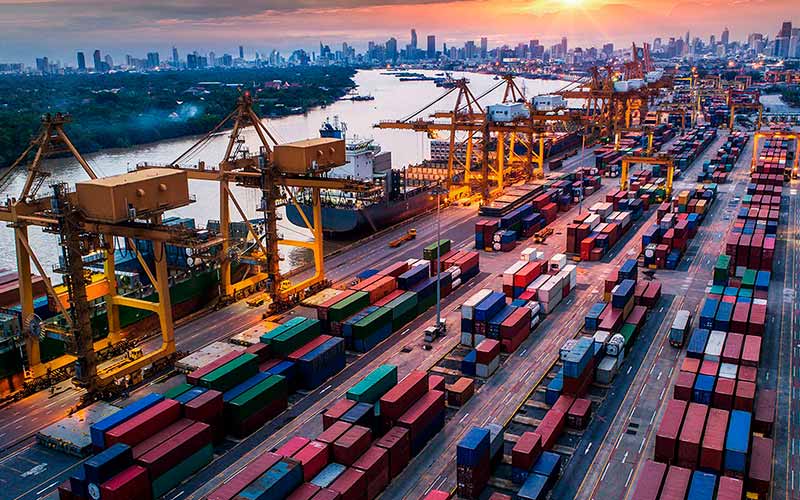
Currently, Vietnam’s logistics service providers use technology at a minimal level in their company operations, mostly through electronic customs declaration software, vehicle locating technology, email, and rudimentary internet… However, over 80% of experts polled by the Vietnam Report believe that enterprises in Vietnam’s transportation and logistics industry would steadily adopt and encourage technology research and application in logistical activities.
Rise of Online Purchasing Creates New Opportunities for Transportation and Logistics Companies
With 70% of Vietnam’s population accessing the Internet, the average access time per person is roughly 28 hours per week, fostering a suitable environment for the e-commerce business to develop. The evolution of e-commerce has resulted in many consumers shifting to online purchasing and the creation of new business models for delivery service providers. To suit the demands of their customers, many e-commerce companies spend on developing technological platforms and logistical systems, expanding warehouses, and boosting distribution locations.
Invest heavily in warehouses, logistics hubs, and cold chains
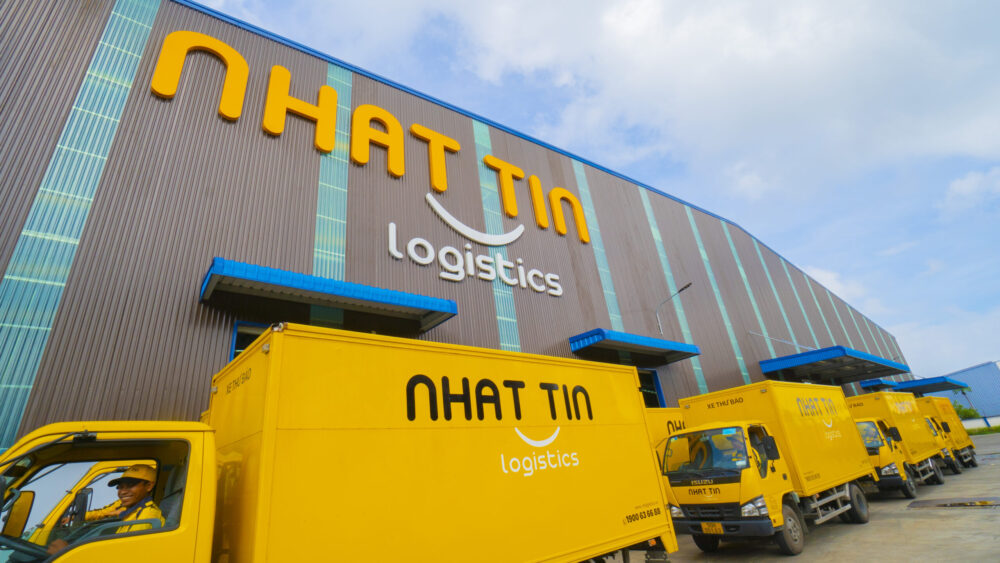
With the dramatic development in the number of e-commerce firms, as well as the necessity to rent space to store, categorize items, and process orders, many businesses have recognized the trend, constructed, and invested to capitalize on it. Invest in a warehouse system, a logistics center with the duty of providing transportation services, fulfilling orders, and professionally distributing in a contemporary, high-quality manner. According to Cushman & Wakefield (C&W), one of the largest real estate service businesses, the cold storage industry in Vietnam has gained a strong attractiveness in the previous two years, driven by import and export orders. pharmaceuticals and vaccinations Food delivery and e-commerce are estimated to exceed $15 billion in revenue by 2025.
Vietnam’s freight and logistics market has just experienced the Covid-19 wave, but there are still bright spots. Viettonkin is confident in its ability to be a top-notch expert in the Vietnam freight and logistics market. We are ready to advise you and keep you up to date on changing market trends as well as policies in this field. Contact us right now to increase exponentially!