Skip to content
Viettonkin

Remote Business Development Consulting in Vietnam

An ongoing business development partner in Vietnam for companies building a commercial position: stakeholder engagement, partner networks, go to market strategy and outsourced business development.

Part of Viettonkin's Market Readiness services

As of 31 December 2025, Vietnam had 45,416 valid foreign direct investment projects with total registered capital of about USD 529.6 billion, according to the Foreign Investment Agency. Every one of those projects had to be licensed, and every one then had to find customers, partners and a route to market in an economy that runs on relationships.

Entering Vietnam is a regulatory challenge; succeeding in Vietnam is a business development challenge. The two are related but distinct. A company can complete incorporation, obtain its licences and run a compliant legal entity, and still spend years struggling for commercial traction because it lacks the local partner relationships, access to stakeholders, route to market strategy and on-the-ground capability that drive revenue here.

Business development consulting is the engagement for companies that are past the entry question and focused on growth. It is an advisory and operational relationship rather than a single study or transaction, in which Viettonkin acts as the client's business development partner in Vietnam, supplying the relationships, market intelligence and execution capacity the client does not yet have internally. It is remote from the client's side: leadership can direct it from abroad while the work happens in the market.

The scope follows where the client is. For a company just entering, it can run from go to market strategy through stakeholder mapping to partner development and an early commercial pipeline. For an established operator, it may focus on one dimension: access to a tender process, repositioning a new product line, or building distributor coverage in provinces the client does not yet reach. In both cases the objectives and the measures of progress are agreed at the start.

17 yearsExperience since 2009
2,000+Businesses supported
45,416Valid FDI projects in Vietnam at the end of 2025
18 October 2026New decree on foreign-invested trading takes effect

How business development consulting differs from business matching

The two services are complementary rather than interchangeable. Many clients use business matching inside a wider business development mandate; others commission it alone because the partner need is specific and the surrounding strategy is already settled.

Scroll the table horizontally on smaller screens.

How business development consulting differs from business matching
DimensionBusiness matchingBusiness development consulting
The question it answersWho should we work with for this specific purpose?How do we build a sustainable, growing business in Vietnam?
ScopeIdentifying, screening and introducing partners for a defined need, such as a distributor for a product category or a joint venture partner for a project.The whole commercial position: stakeholders, partner network, go to market strategy, channel structure, pipeline development and operational business development capacity.
DurationTime bound, closing once qualified introductions have been made and followed through.Ongoing, with objectives reviewed as the commercial position develops.
Typical clientAn investor who knows what kind of partner it needs.A company that has entered, or is about to, and needs commercial traction.

Stakeholder mapping and engagement strategy

Commercial success in Vietnam needs a clear map of who matters and a deliberate plan for engaging each of them. In a market where regulatory relationships carry commercial weight, this layer is foundational rather than optional.

The map covers government authorities, industry associations, anchor customers, owners of distribution channels, sector regulators and community stakeholders. It goes beyond a list of names: each stakeholder is assessed for influence, interests and role in the decisions that affect the client's objectives, and an engagement approach is designed for each priority group, with a clear view of who in the client's own organisation owns each relationship.

Maps built before mid 2025 need rebuilding. Vietnam merged its planning and investment ministry into the Ministry of Finance, moved business registration to provincial Departments of Finance, and reorganised local government into 34 provinces and centrally run cities with no district tier from 1 July 2025. From 18 October 2026, business licences for trading and distribution by foreign-invested companies move from provincial Departments of Industry and Trade to provincial People's Committees under Decree 342/2026/ND-CP.

Engagement is sustained rather than episodic. Project approvals, licence amendments, tender participation and policy consultations all go better with a counterpart who knows the company before the request arrives, and that familiarity is built through regular, appropriate contact over the life of the engagement rather than through occasional visits when something is needed.


Aerial view of an expanding city district at dusk

Building a partner ecosystem, and screening every partner in it

A single distributor or alliance is a starting point, not a commercial position. Durable coverage usually needs partners at several layers, each of them checked before the relationship deepens.

Layered partner networks

A durable presence typically combines national distributors with sector reach, regional agents in key provinces, business customers or off-takers at anchor scale, and partners who can support approvals and licence renewals. Viettonkin identifies, approaches and qualifies partners at each layer over the course of the engagement, and manages those relationships as they develop.

Screening at the start

Every partner introduced goes through the same screening: legal entity verification against registration records, financial credibility, ownership and beneficial interests, compliance history and reputation in the sector. Since 1 July 2025 companies have had to maintain beneficial owner information for registration, which gives a firmer basis for the ownership questions asked of a partner.

Screening again at key moments

Screening is not a single event. It is repeated at significant points in a relationship: before a contract renewal, before a capital commitment, or before exclusivity or a larger territory is granted. Ownership changes, disputes and new liabilities arise during a relationship as well as before it.

Formalising agreements

Distribution, agency and supply agreements are prepared and reviewed through Viettonkin's legal team, with the licensing position of each party confirmed. Whether a foreign-invested company can distribute directly or relies on a licensed partner is governed by rules that change on 18 October 2026, so agreements are drafted against the framework that will apply.

Go to market strategy that is implemented, not handed over

A go to market plan imported from another market rarely survives contact with Vietnam. It has to fit the product, the sector and the competitive position here, and it has to be carried out by people who are in the market.

The strategy covers channel structure, whether direct sales, distribution, agency or platform; pricing for the Vietnamese market; positioning against both local and foreign competitors; and a phased geographic plan setting out which provinces and cities to enter, in what sequence and on what commercial logic. Each choice is tied to the operational steps needed to execute it: partner agreements, regulatory approvals, logistics and customer development.

Trade policy now belongs in that plan for any business that exports from Vietnam or sources through it. The reciprocal tariff framework announced in 2025 fell when the United States Supreme Court held on 20 February 2026 that emergency economic powers do not authorise tariffs. Later measures followed, including a Section 301 action signed on 23 July 2026 that directs a 12.5 percent tariff on goods from Vietnam, and a separate investigation into Vietnam's intellectual property enforcement opened on 29 May 2026. These are reviewed as they develop, because they change which channels and supply chain positions make sense.

The plan is carried out alongside the client. Viettonkin's team takes part in the meetings, partner negotiations and stakeholder conversations the plan requires, and reports progress against the objectives agreed at the outset. Where the evidence shows that part of the plan is not working, the plan is revised rather than defended.

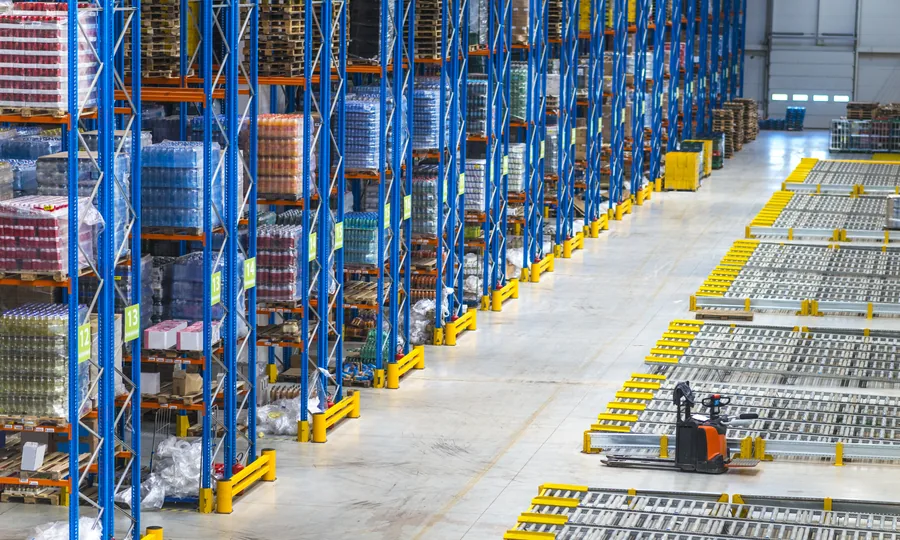
Distribution warehouse with pallet racking stocked with goods

Outsourced business development support

Some companies are operating in Vietnam but do not yet have the internal capacity to build their commercial position. For them, Viettonkin can act as the business development function itself.

Partner and pipeline management

Managing the client's partner relationships and developing and progressing the commercial pipeline, with regular reporting to the client's leadership abroad. The client keeps ownership of its commercial decisions and pricing; Viettonkin provides the in-market capacity to pursue them consistently.

Presence at events and associations

Attending industry events and association activities on the client's behalf, following up the contacts they produce, and keeping the client visible in the forums where its customers and partners meet. These forums are often where early word of a competitor's move or a regulatory change first appears.

Government and stakeholder communication

Managing correspondence with authorities and stakeholder communications in Vietnamese, from routine exchanges to preparation for approvals, licence renewals and tender participation. Correspondence is kept on file so that the client holds a complete record of what was said and what was committed.

A lean alternative to early headcount

This model gives a company an on-the-ground commercial presence that a small headquarters team cannot sustain from abroad, and lets it test and build a market before committing to a full local team. Hiring locally remains an option as the business grows, and Viettonkin's HR services can support that transition.

Personal data in commercial outreach

Lead lists, contact records and campaign data contain personal data. Under the Law on Personal Data Protection, in force since 1 January 2026, consent must be specific to its purpose and silence does not count as consent, so outreach is built on identified, direct approaches and properly recorded permissions.

When business development consulting is the right engagement

The engagement suits companies with a commercial rather than a regulatory problem. These are the situations in which it adds most.

Entered, but without traction

You have completed market entry and are ready to build commercial traction, but lack the partner network, stakeholder relationships or go to market strategy to generate revenue at the pace the investment requires. The licence is in place; the customers and channels are not yet.

Growing into new territory

You are an established operator seeking growth in new provinces, sectors or customer segments where your current commercial model has no reach. Expansion into a new region usually means a new set of distributors, authorities and competitors, even inside a market you already know well.

Sustained engagement with authorities

You need continuing engagement with authorities for project approvals, licence renewals, tender participation or policy consultation, which calls for an adviser present in the market rather than occasional visits. The 2025 reorganisation made this more important, because many counterparts and responsibilities changed.

Building a channel network at scale

You want a distribution or channel partner network across Vietnam but lack the business development resources or local relationships to identify, qualify and develop those partners at the scale the plan needs, and to keep screening them as the network grows.

Operating in a sensitive sector

You work in a complex or politically sensitive sector where trade measures, supply chain scrutiny and regulatory change call for ongoing intelligence and periodic recalibration rather than a one time assessment. United States trade measures affecting Vietnam have changed several times since 2025, which is the clearest current example.

Frequently asked questions

Practical answers on scope, screening, trade measures and outsourced business development.

What is the difference between business development consulting and business matching?

Business matching is a defined engagement to find, screen and introduce partners for a specific need. Business development consulting is an ongoing relationship that builds the whole commercial position: stakeholders, partner network, go to market strategy, channels and pipeline. Matching is often one component of a wider business development mandate.

Why is it called remote business development consulting?

Because your leadership can direct it from abroad while the work happens in Vietnam. Our team attends the meetings, manages partner and stakeholder relationships and progresses the pipeline in the market, and reports to your team wherever it is based.

How do you screen partners during the engagement?

Each partner is checked on legal entity registration, financial credibility, ownership and beneficial interests, compliance history and reputation before the relationship is formalised, and checked again at significant points such as a renewal, a capital commitment or the grant of exclusivity.

How do current trade measures affect a business development plan?

For businesses that export from Vietnam or source through it, they can change which channels and supply chain positions make sense. The 2025 reciprocal tariffs were struck down by the United States Supreme Court on 20 February 2026, and later measures followed, including a Section 301 action signed on 23 July 2026. We review these as they develop.

Can you act as our business development team in Vietnam?

Yes. Under an outsourced model we manage partner relationships, develop the pipeline, attend industry events and handle stakeholder correspondence on your behalf, with regular reporting. You keep control of commercial decisions, and can move to a local team when the business justifies it.

Turn a licence into a commercial position.

Tell us where your business in Vietnam stands today, where you want it to be and what is holding it back. We will set out which parts of the commercial position need building first and how an engagement would be organised.

Schedule a consultation